

The Kalamazoo Promise Announces Scholarship Coverage to Historically Black Colleges & Universities
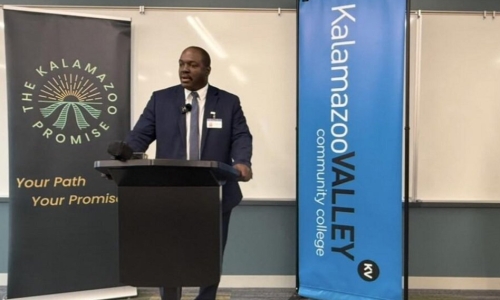
The Kalamazoo Promise announced today that beginning in Fall 2027, the scholarship will expand to cover tuition and mandatory fees at accredited, 4-year historically Black colleges and universities (HBCUs).
Students who meet The Promise eligibility requirements can use their scholarship at eligible colleges and universities in Michigan and at HBCUs across the nation.
“Over our 20-year history, The Kalamazoo Promise has always been about opening doors for our students and expanding it to include HBCUs widens that promise in a meaningful way,” said Von Washington Jr., CEO of The Kalamazoo Promise. “These institutions have a long legacy of lifting up scholars and leaders, and now more Kalamazoo Public Schools graduates can choose a path that feels like home without worrying about the cost.”
The expansion follows research and planning by a committee of local education leaders and representatives from community organizations. The committee reviewed research on HBCUs, considered how the initiative could best serve future scholars, and established guidelines and an implementation framework.
“Belonging and identity are just as essential to student success as access,” said Sarah Klerk, chief strategy officer at The Kalamazoo Promise. “Now fewer of our scholars will have to choose between financial support and a school where they see themselves reflected. Removing that tradeoff is part of our commitment to closing gaps in educational and economic outcomes.”
This initiative will not retroactively fund Promise scholars currently attending HBCUs for prior semesters, but beginning in the Fall of 2027, it will cover future semesters at HBCUs for eligible KPS graduates already enrolled.
“We extend our deepest gratitude to The Kalamazoo Promise’s visionary leaders and anonymous donors for their continuing commitment to our graduates,” said Dr. Darrin Slade, superintendent of Kalamazoo Public Schools. “This initiative is expected to significantly increase scholarship utilization by removing geographic boundaries, allowing more scholars to choose the educational path that fits them best.”